A little bit about myself.
Call it a background check.

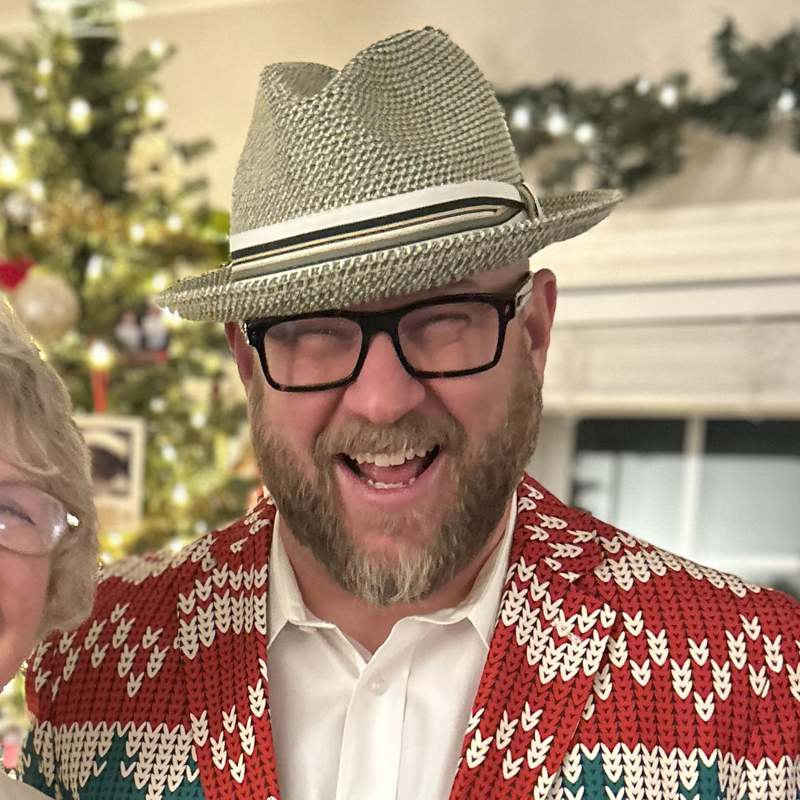
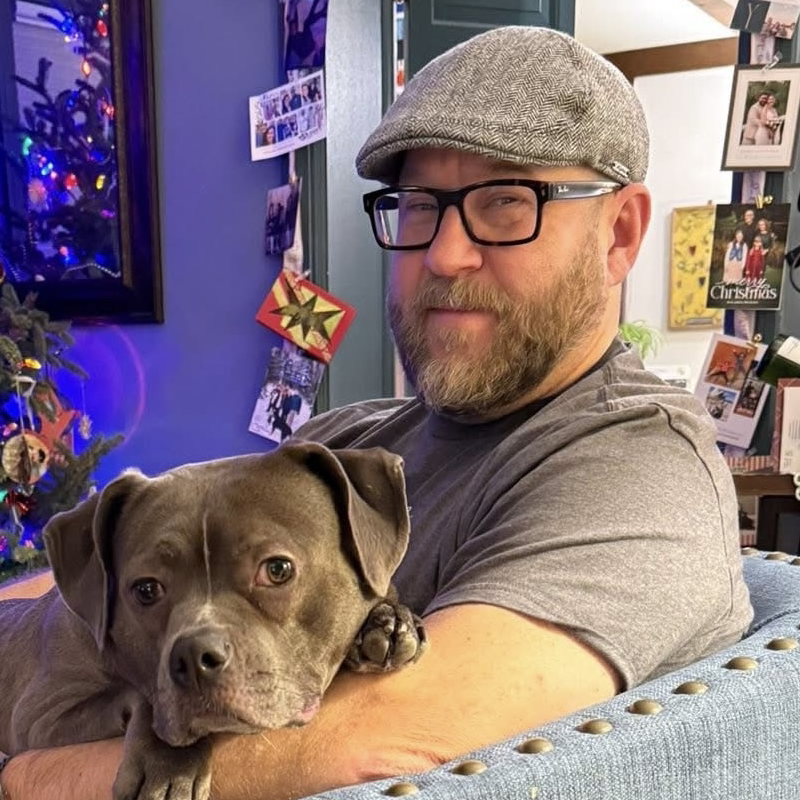

If you go back far enough you get stories of me at eight years old walking around with a bag of 60-plus Crayola markers, willing to draw on anything. My parents probably would have been early adopters of Washable Crayola. I colored the walls more than once.
High school was two years sneaking into the art studio, then two years never leaving. Painting and sculpture were my thing. Graphic design became my path from canvas to screen. Twenty-five-plus years later I'm still designing things, still looking for a good team and good culture, and still trying to add value with work that actually matters to the people using it.
I believe good design leaders should stay close to the craft if at all possible. I have been lucky enough to always be close enough to knock out a few concepts myself. It helps me understand the challenges my team is facing and see the issues before they become blockers. I still sketch. I still push pixels when it matters. I still sit in the room when the hard UX problem needs to be solved. I don't see that as a weakness in a director. It keeps me close to the direction of the work and gives me enough context to support my designers when they concept, present, and problem solve. That's what makes a better manager and mentor.
Management
My first real use of AI was for team management. I wrote short impressions of each person, combined that with their previous goals, and asked AI to help me build the next set. It got me 80% of the way there before I'd finished my coffee. I was beginning to understand what AI could be for me: a thinking partner that eliminates the blank page and compresses the distance between my intention and direction for my team.
Prototypes
So far, Figma's Make and Lovable have worked when I've been able to set parameters for it — ensuring it checks its decisions against a design system first before prototyping or expanding ideas. An established architecture is key for sure. That context is what has helped my usage of AI separate its output from generic proof of concepts. It has also accelerated ideation, tightened the handoff between design and product, and let teams explore in hours what used to take days. It's also shown me its limits: the deeper and more specific the system, the more effort it can be for AI to operate at the required precision. I feel the governance gap requires a trained UX eye for hitting deliverables on first review, not third or fourth.
Building
I just launched my new portfolio site with the help of Claude Cowork and Claude Code. Having never been a developer, the ease of use is incredible, and even though it's been very fast, I'm sure I'm still behind in really understanding its potential in creation and speed. Being ready to learn more, evolve and change directions is certainly going to be important both personally and in thinking how AI can move UX and UX Departments forward.
Looking Forward
What excites me most isn't AI replacing design work — it's AI putting new product creation into a different gear entirely. The distance from idea to market is collapsing. Prompting agents to execute large-scale effort in hours rather than weeks is real, and I want to be building in that space.
I'd like to think we all want life to be smooth sailing, at home and at work. I put in the time to find that balance, and I bring that same intention to every team I join. At work I like to stop myself or my team and ask "what exactly are we solving for?" It gets everyone to pause, be intentional, and make sure the conversation or the work is headed somewhere worth going.
And then in life, in a very similar fashion, I lean on Ferris. "Life moves pretty fast. If you don't stop and look around once in a while, you could miss it." Still true. Still relevant. Still my reminder to pay attention.